Breathlessness, ankle swelling, fatigue, or a sudden rise in weight can signal fluid buildup, reduced pumping ability, or both. You will learn how heart failure is classified, how clinicians confirm it, which treatments address congestion and long-term risk, and when worsening symptoms require emergency care rather than an outpatient appointment.
Key takeaways
- Seek emergency help for severe breathlessness, chest pain, fainting, or blue lips.
- Track weight, swelling, breathlessness, blood pressure, and pulse as instructed.
- Ask clinicians which medicines treat congestion, blood pressure, rhythm, and heart function.
- Request specialist review when symptoms worsen or medicines no longer control them.
What do heart failure symptoms mean, and when is it an emergency?
Heart failure means the heart cannot pump enough blood for the body’s needs, or cannot fill normally without raising pressure. The resulting heart failure symptoms reflect fluid buildup, reduced circulation, or both.
Track these changes from your usual baseline:
- Breathlessness in heart failure, first during activity and later at rest
- Swollen ankles or legs
- Rapid weight gain from retained fluid
- Fatigue and reduced exercise tolerance
- Cough that worsens when lying down
- Waking up gasping or needing extra pillows to breathe
An echocardiogram measures left-ventricular ejection fraction, but that number does not describe the entire condition.
| Type | Ejection fraction | Plain-language meaning |
|---|---|---|
| Heart failure with reduced ejection fraction (HFrEF) | Usually 40% or less | The main pumping chamber squeezes less effectively |
| Heart failure with mildly reduced ejection fraction (HFmrEF) | 41% to 49% | Pumping is mildly below the usual range |
| Heart failure with preserved ejection fraction (HFpEF) | 50% or higher | The heart may squeeze normally but fill poorly or under high pressure |
Call emergency services immediately for chest pain, severe breathlessness at rest, fainting, blue lips, new confusion, or pink frothy sputum. Do not drive yourself or wait for an outpatient appointment. A sudden worsening from your usual symptoms needs urgent assessment even when your ejection fraction is unknown.
How do clinicians confirm heart failure and find its cause?
Heart failure diagnosis starts with your story, not a single test. The clinician asks about breathlessness, swelling, fatigue, previous heart attack or valve disease, high blood pressure, diabetes, kidney disease, medicines, alcohol use, and family history.
They check for lung crackles, neck-vein congestion, ankle swelling, heart murmurs, an abnormal pulse, blood-pressure changes, low oxygen saturation, and signs of poor circulation.
The evaluation commonly includes:
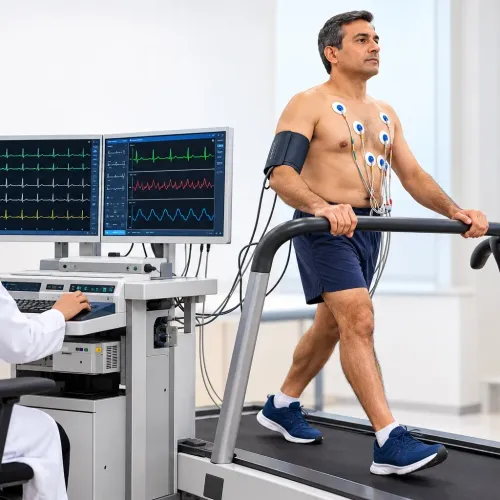
- An ECG for heart failure, which can reveal rhythm problems, a previous infarction, conduction delay, or left-ventricular strain.
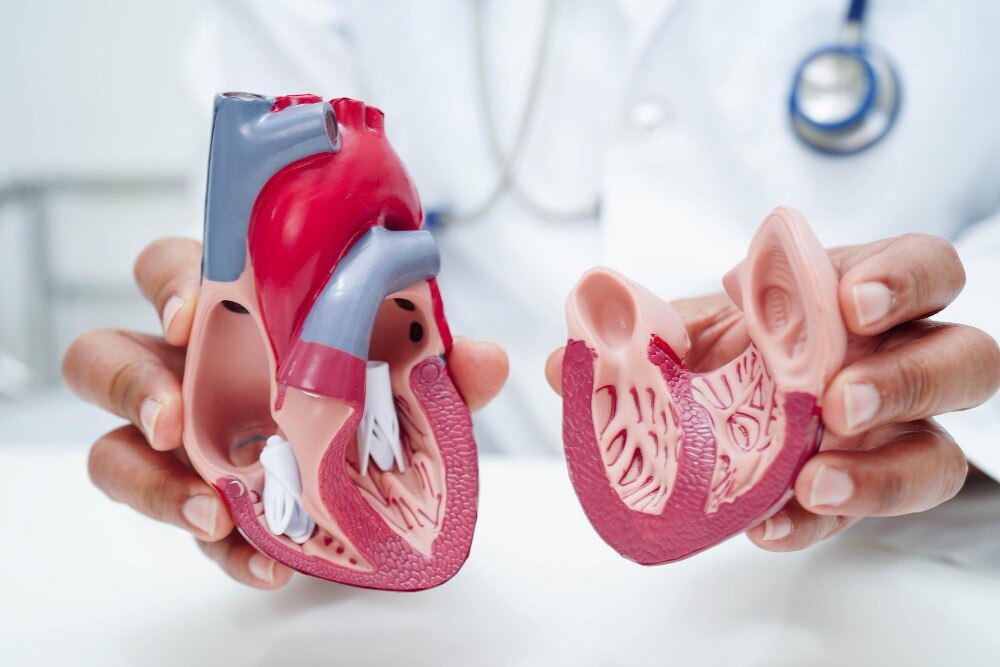
- An echocardiogram, which measures echocardiogram ejection fraction and assesses valves, chamber size, wall motion, filling-pressure clues, and right-heart function.
- A chest X-ray, which can show lung congestion or an enlarged cardiac silhouette.
- Blood tests: creatinine and estimated glomerular filtration rate, sodium, potassium, magnesium when indicated, a complete blood count when relevant, thyroid-stimulating hormone, and BNP and NT-proBNP testing.
These results support a syndrome and help identify triggers; they do not replace clinical judgment. A normal-looking ejection fraction does not exclude HFpEF, because filling pressure and other abnormalities can still cause symptoms. Raised BNP or NT-proBNP requires interpretation alongside kidney function, heart rhythm, age, and body size.
How does treatment differ during sudden worsening and stable long-term care?
A hospital admission changes the immediate goal: remove dangerous congestion first, then rebuild long-term protection. Acute decompensated heart failure treatment uses intravenous loop diuretics for significant fluid overload.
| Acute worsening | Stable chronic care |
|---|---|
| Intravenous loop diuretics reduce breathlessness and swelling | Oral loop diuretics control congestion as needed |
| Urine output, symptoms, blood pressure, kidney function, sodium, potassium, and magnesium guide adjustment | Guideline-directed medical therapy is introduced and titrated across several drug classes |
| Increase the loop-diuretic dose or add another diuretic class if fluid removal is inadequate | Loop diuretics relieve congestion but do not replace disease-modifying treatment |
A modest creatinine rise does not automatically require stopping diuresis or renin-angiotensin-system treatment. Severe acute kidney injury, symptomatic low blood pressure, or severe hyperkalaemia requires prompt clinical reassessment.
For chronic HFrEF, clinicians use four disease-modifying groups:
- An ARNI, such as sacubitril/valsartan, or an ACE inhibitor/ARB when appropriate
- The evidence-based beta blockers for HFrEF: carvedilol, metoprolol succinate, or bisoprolol
- An MRA, including spironolactone or eplerenone
- SGLT2 inhibitors for heart failure, including eligible people without diabetes
Clinicians introduce and titrate different classes rather than maximizing one medicine before starting the others. Start or increase beta blockers after clinical stabilization, not during marked fluid overload, when they can worsen congestion or low-output symptoms.
Never combine an ACE inhibitor with an ARNI. Allow a 36-hour washout when switching from an ACE inhibitor to an ARNI.
What should you monitor at home while taking heart-failure treatment?
Record changes, do not guess at them. Heart failure self-management works best as a daily routine that shows fluid retention, treatment effects, and warning symptoms before they become severe.
1. Weigh yourself every morning after using the toilet and before breakfast, at the same time, on the same scale. Record your weight, breathlessness, ankle swelling, sleep, cough, exercise tolerance, pulse when instructed, and each medicine dose.
2. Follow the written action plan. Report the specified weight increase or symptom pattern; do not increase or reduce a loop diuretic independently.
Loop diuretics remove excess fluid and relieve swelling and breathlessness, while ARNI or ACE inhibitor/ARB reduces harmful vascular and cardiac strain, beta blockers slow and protect the heart, MRAs block aldosterone, and SGLT2 inhibitors lower heart-failure events.
3. Attend blood-pressure, pulse, kidney-function, potassium, and sodium checks. Seek advice for dizziness, fainting, very low blood pressure, muscle weakness, palpitations, reduced urine, excessive thirst, or other dehydration symptoms.
4. Do not stop medicine when you feel better, double a missed dose, or use potassium-containing salt substitutes without approval. Ask before using ibuprofen or other NSAIDs; NSAIDs and heart failure can worsen fluid retention and kidney problems.
5. Use your sodium plan, balance activity with rest, and ask about cardiac rehabilitation. Vaccinations and travel planning matter: carry medicines, prescriptions, and medical records.
Fluid restriction heart failure advice is not routine for everyone. Use the clinician’s target, especially with severe congestion or low sodium, rather than forcing excessive fluids or restricting them unnecessarily.
When are heart-failure medicines, devices, or specialist review reconsidered?
An improved ejection fraction does not mean the disease is cured. This category is called heart failure with improved ejection fraction, and stopping treatment can cause relapse. In HFpEF, HFpEF treatment includes an SGLT2 inhibitor when appropriate, while care targets congestion, high blood pressure, atrial fibrillation, ischemia, obesity, diabetes, kidney disease, and sleep-disordered breathing.
No single HFrEF-style regimen fits every patient.
| Option | What it is intended to do | When it is reconsidered |
|---|---|---|
| Cardiac resynchronization therapy | Coordinates ventricular contraction; it is not suitable for every person with a low ejection fraction | Symptomatic HFrEF despite medical therapy, especially sinus rhythm, left bundle-branch block, and CRT QRS 150 milliseconds or longer |
| Implantable cardioverter-defibrillator heart failure | Primarily prevents sudden cardiac death, not daily breathlessness or congestion | Ejection fraction remains 35% or less after at least three months of optimized treatment, with expected meaningful survival beyond one year; timing varies by cause |
| Continued medicines after improvement | Reduces relapse risk even when symptoms and ejection fraction improve | Reassess before reducing or stopping treatment |
A specialist heart failure review can interpret test trends, check therapy and device eligibility, adjust doses safely, and decide whether advanced evaluation is needed. Dr Vijay Bang Cardiologist in Mumbai can provide structured assessment, medication review, follow-up testing, and discussion of device or advanced-care decisions.
Related services
TAVI / TAVR / PAVR Catheter based, transcatheter aortic valve replacement (TAVR), also known as transcatheter aortic valve implantation (TAVI). View service → |
Pacemaker Pacemaker Why do you need a pacemaker specialist Pacemakers are temporary or permanent, a medical device which uses electrical impulses, delivered by... |
Frequently asked questions
What do heart failure symptoms mean, and when is it an emergency?
Breathlessness, swelling, rapid weight gain, fatigue, and reduced exercise tolerance can reflect fluid buildup or reduced circulation. Seek emergency care for severe breathlessness at rest, chest pain, fainting, confusion, or blue lips.
How do clinicians confirm heart failure and find its cause?
Clinicians combine your history and examination with an electrocardiogram, blood tests such as BNP or NT-proBNP, chest imaging, and an echocardiogram. They then assess causes such as coronary artery disease, high blood pressure, valve disease, or rhythm disorders.
How does treatment differ during sudden worsening and stable long-term care?
Sudden worsening may require urgent assessment, oxygen, intravenous diuretics, and treatment of the trigger. Stable care focuses on prescribed medicines, reducing excess fluid and salt when advised, exercise guidance, and managing the underlying cause.
What should you monitor at home while taking heart-failure treatment?
Record your weight regularly, along with breathlessness, swelling, blood pressure, pulse, urine changes, and medicine effects. Contact your care team after rapid weight gain or worsening symptoms rather than changing doses yourself.
When are heart-failure medicines, devices, or specialist review reconsidered?
Review treatment when symptoms persist, kidney function or potassium changes, blood pressure limits medicines, or the heart rhythm or pumping function changes. Specialist assessment can determine whether an implantable device or advanced heart-failure care is appropriate.
Related services
Cardiology Cardiology The Cardiology is a branch of cardiac medicine dealing with diseases of the heart as well as parts of the blood circulatory system. |
Coronary Angioplasty About Coronary Angioplasty and why you need the best angioplasty doctor The Percutaneous coronary angioplasty (PTCA or PCI) is a non-surgical... View service → |