A narrowed coronary artery can limit oxygen-rich blood reaching the heart, but seeing a blockage does not automatically mean that a stent is the right answer. You will learn how balloon angioplasty restores flow, how doctors decide whether PCI is needed, what happens during recovery, and which warning signs require urgent help.
Key takeaways
- Call emergency services for chest pressure, breathlessness, sweating, or pain spreading to your arm or jaw.
- PCI opens a narrowed artery but does not remove the atherosclerosis causing plaque buildup.
- Take antiplatelet medicine exactly as prescribed to protect the new stent from clotting.
- Ask your cardiologist which access site, stent type, medicines, and recovery limits apply to you.
How a balloon and stent restore blood flow
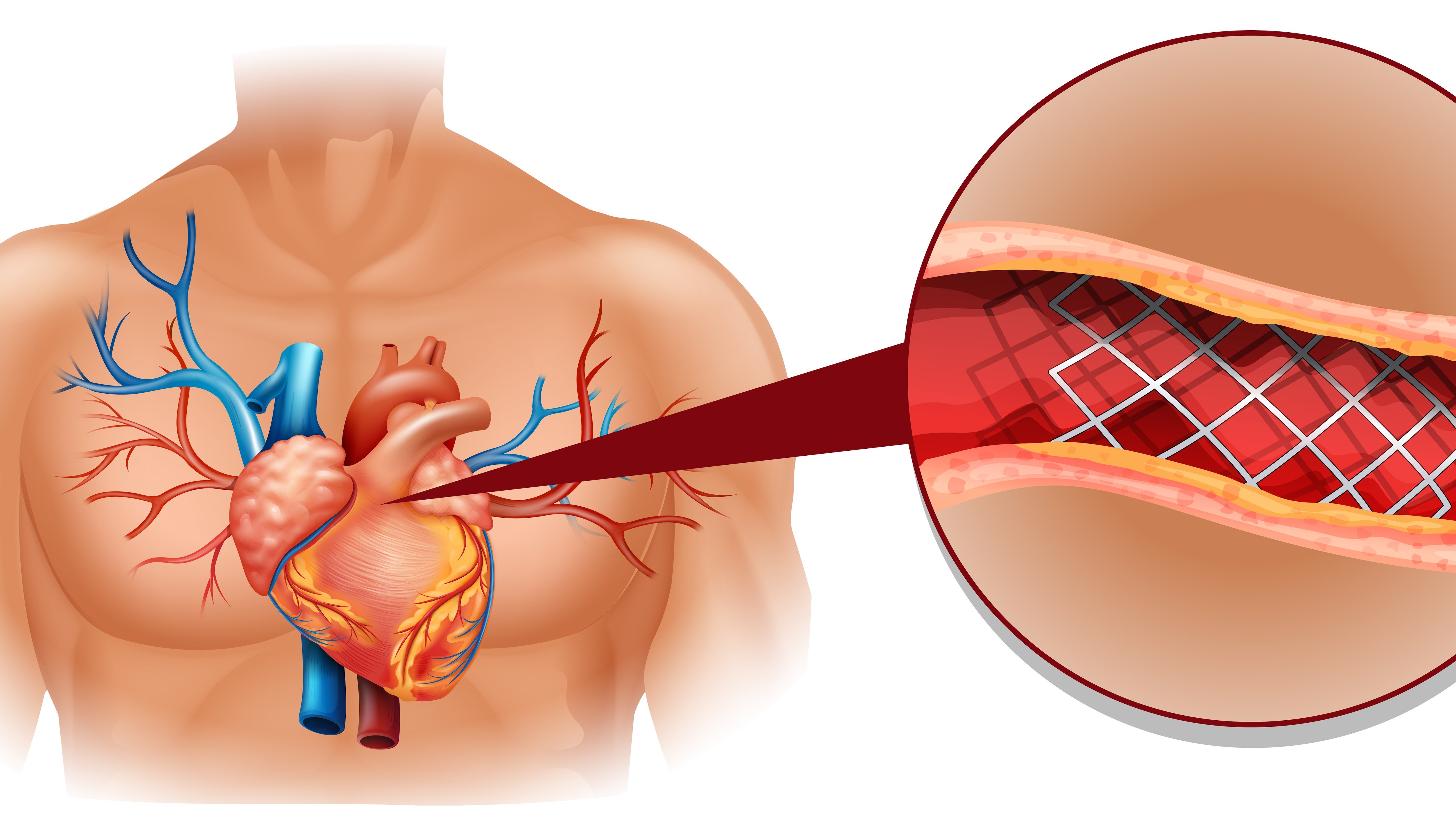
Angioplasty physically widens a coronary artery blockage. A cardiologist guides a catheter through an artery in the wrist or groin to the narrowed segment, inflates a small balloon, and presses plaque against the artery wall. This balloon angioplasty creates a larger channel for blood; it does not remove the underlying atherosclerosis.
A stent is usually expanded at the same site and left behind as a mesh scaffold to keep the artery open while it heals. Angiography only images the arteries; angioplasty treats the narrowing.
| Option | What physically happens | Main role |
|---|---|---|
| Angioplasty with stent | Balloon widens the segment; stent supports it | Restores flow directly through a selected narrowing |
| Medication | Lowers clotting risk, blood pressure, cholesterol, or heart workload | Controls disease and symptoms without opening the artery |
| Watchful follow-up | No immediate mechanical change | Tracks stable symptoms or findings when intervention offers little added benefit |
| Bypass surgery (CABG) | Creates a new route around the blockage using a blood vessel graft | Treats complex or multiple blockages when bypass offers a better route |
PCI does not cure every source of chest pain or prevent future blockages. Doctors choose it from your symptoms, heart-attack findings, ischemia, artery anatomy, and pressure measurements such as fractional flow reserve, not from the narrowing percentage alone.
How doctors decide whether PCI will help
Persistent angina despite appropriate medicines makes a PCI decision more favourable, especially when symptoms limit walking, work, or sleep. Doctors also weigh stress test evidence of significant ischaemia, heart-pumping function, diabetes, kidney disease, and your preferences.
| Finding | What it suggests | Usual implication |
|---|---|---|
| Coronary CT angiography findings | Plaque, narrowing, vessel location, and overall coronary anatomy | Confirms whether invasive angiography is worth pursuing |
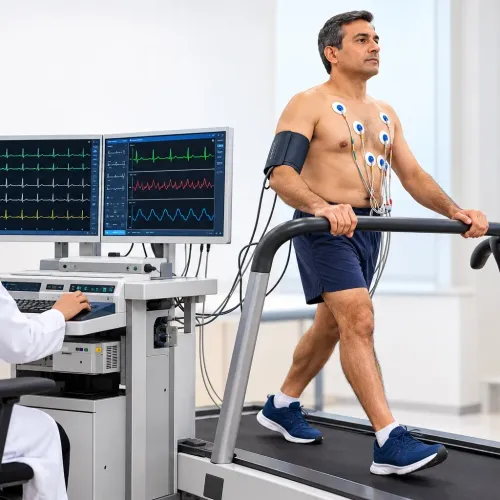
| Stress test | Reduced blood supply during exertion | Supports treatment when symptoms match the affected territory |
| Angiogram | Exact lesion length, severity, calcification, branching, and vessel size | Shows whether PCI is technically suitable |
| FFR or iFR | Pressure-related blood-flow loss across a narrowing | FFR 0.80 or less, or iFR 0.89 or less, supports a flow-limiting lesion |
A striking angiogram alone does not prove that opening the artery will help. For an intermediate narrowing, FFR or iFR can prevent an unnecessary stent; a result above these thresholds often favours medicines and observation.
PCI is more compelling for frequent angina or high-risk anatomy where revascularisation could improve prognosis. For stable disease with little or no angina, intensive medical treatment may offer similar protection from death or heart attack, making observation reasonable.
A left-main or complex multivessel pattern may favour bypass surgery instead, so the PCI decision is individual rather than based on a percentage blockage.
When blocked flow becomes a heart-attack emergency
Primary PCI is the preferred emergency treatment for a STEMI caused by a suddenly blocked coronary artery when it can be performed promptly. Doctors aim to complete it within 120 minutes of diagnosing the STEMI. If that target cannot be met within the relevant treatment window, fibrinolytic medicine may be considered when appropriate.
Every minute matters because the blocked artery deprives heart muscle of oxygen. The longer blood flow remains interrupted, the more muscle is permanently damaged, increasing the risks of heart failure, dangerous rhythms and death. A balloon and stent can reopen the artery, but they cannot reliably restore muscle that has already died.
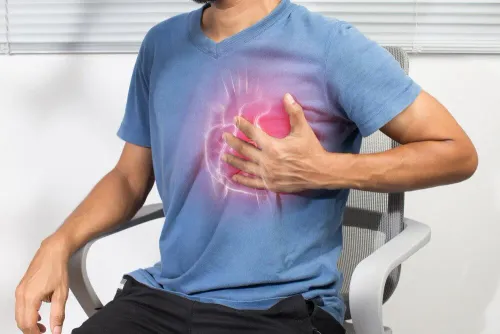
Call emergency services immediately if you have possible heart-attack symptoms, including chest pressure, breathlessness, sweating, nausea or pain spreading to the arm, jaw or back. Do not drive yourself.
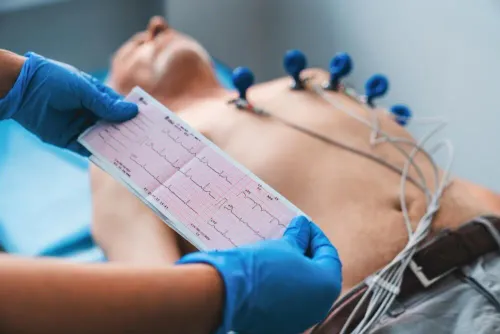
- Paramedics can perform an ECG and identify a STEMI before arrival.
- Emergency services can alert the catheterisation team, reducing delays after reaching hospital.
- If your condition worsens during transport, trained professionals can treat an abnormal rhythm, collapse or severe breathlessness.
Even if the symptoms improve, seek urgent assessment; a partially blocked artery can close again.
What happens before, during, and immediately after PCI
Consent covers the reason for PCI, alternatives, and risks such as bleeding, stroke, kidney injury, artery damage, heart attack, and allergic reaction. Blood tests check kidney function, blood count, and clotting; tell the team about allergies, diabetes medicines, and anticoagulants.
Follow instructions about fasting, usually avoiding food for several hours while clear-fluid rules come from the hospital.
- A nurse prepares the wrist or groin, inserts an intravenous line, and gives local anaesthetic with medication to help you relax. Radial access through the wrist is preferred for many procedures because it reduces bleeding; femoral access through the groin remains useful for large devices or complex cases.
- The cardiologist guides a catheter to the coronary artery and injects contrast dye while taking X-ray images. You may feel brief warmth or a metallic taste.
- A guidewire crosses the narrowing. The doctor inflates a balloon to widen it, then deploys a mesh stent that presses against the artery wall and supports the opening.
- Staff remove the catheter, seal or compress the entry site, and monitor your pulse, blood pressure, ECG, bleeding, and kidney function.
After an uncomplicated planned PCI, observation may last several hours or overnight. Emergency PCI after a heart attack often requires several days in hospital. Before discharge, confirm your aspirin and prescribed P2Y12 inhibitor schedule, wound instructions, warning signs, and follow-up appointment.
Choosing the stent and protecting it with medication
A drug-eluting stent releases medicine that slows tissue growth inside the artery, reducing repeat narrowing compared with a bare-metal stent. It does not remove atherosclerosis or make restenosis impossible; new symptoms months or years later need assessment.
| Option | Main difference | Selection considerations |
|---|---|---|
| Drug-eluting stent | Releases an antiproliferative drug | Usually preferred when repeat narrowing would be dangerous or another procedure would be difficult |
| Bare-metal stent | Provides metal support without drug release | Consider only when the treating team expects that prolonged antiplatelet treatment is unsafe or urgent surgery may be needed |
| Either stent | Remains a surface where a clot can form | Requires prescribed dual antiplatelet therapy after implantation |
Aspirin and P2Y12 inhibitor treatment prevents platelets from forming a clot inside the stent. The P2Y12 drug may be clopidogrel, prasugrel, or ticagrelor. The duration depends on whether PCI followed an acute coronary syndrome, your bleeding and clotting risks, and whether you also need an anticoagulant.
Bleeding, kidney disease, anaemia, planned surgery, age, diabetes, shock, and complex coronary disease influence the plan.
Do not stop either medicine yourself, even if bruising occurs or you feel well. Stopping early can cause stent thrombosis, which can abruptly block the artery and trigger a heart attack or death; contact the treating team before changing a dose.
Recovery, complications, and life after angioplasty
An uncomplicated elective PCI recovery often means going home the same day or next day; emergency treatment after a heart attack can require several days of monitoring. Avoid strenuous exercise and heavy lifting for about 48 hours after wrist access and up to a week after groin access, following your discharge instructions.
Keep the access wound clean and dry for 24 hours. Do not soak it in a bath or pool until healed. Seek urgent care for bleeding that does not stop after firm pressure, a growing lump, severe pain, increasing redness, drainage, a cold or numb limb, or sudden chest pain.
Driving is commonly restricted for at least 48 hours after uncomplicated elective PCI and longer after a heart attack or complication. Desk work may resume within several days; physical work requires medical clearance and longer restrictions.
Protect the stent by taking aspirin and the prescribed P2Y12 inhibitor exactly as directed. Stopping them without instruction can cause stent thrombosis. Restenosis remains possible, and recurring chest pain can also reflect another blockage, small-vessel disease, spasm, or a non-cardiac cause.
- Cardiac rehabilitation and gradually increased exercise
- Smoking cessation and heart-healthy eating
- Cholesterol, blood-pressure, and diabetes control
- Medication review and attendance at cardiology visits
Dr Vijay Bang Cardiologist in Mumbai can use follow-up visits to review symptoms, medicines, wound healing, and risk-factor targets.
Frequently asked questions
How does a balloon and stent restore blood flow?
A catheter carries a small balloon to the narrowed coronary artery. Inflation presses plaque against the artery wall and widens the channel. A stent remains in place to support the artery and keep it open.
How do doctors decide whether PCI will help?
Doctors assess your symptoms, ECG, blood tests, imaging, the artery’s narrowing, and the amount of heart muscle at risk. They compare PCI with medicines or bypass surgery before recommending treatment.
When does blocked blood flow become a heart-attack emergency?
Treat chest pressure, pain spreading to the arm, back, neck, or jaw, breathlessness, cold sweating, nausea, or sudden weakness as an emergency. Call emergency services instead of driving yourself.
What happens before, during, and immediately after PCI?
The team reviews medicines, allergies, kidney function, and consent before PCI. During the procedure, a catheter enters through the wrist or groin and delivers the balloon and stent. Afterward, staff monitor the access site, heart rhythm, and symptoms.
How do doctors choose a stent and protect it with medication?
Your cardiologist selects a stent based on the artery’s size, length, location, and blockage pattern. Antiplatelet medicines reduce stent-clot risk, so do not stop them without medical advice.