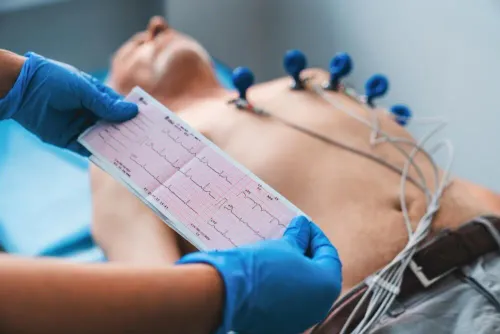
Treatment depends on the rhythm causing the problem, how long it lasts, whether it threatens blood flow, and the condition of your heart. By the end, you will know which symptoms require emergency care, how clinicians identify an intermittent arrhythmia, and how medicines, procedures, devices, and lifestyle changes fit together.
Key takeaways
- Seek emergency care for fainting, chest pain, severe breathlessness, or a sustained rapid heartbeat.
- Use a Holter monitor or event recorder when a brief ECG misses intermittent arrhythmia.
- Treatment depends on the rhythm, cause, symptoms, stroke risk, and heart function.
- Ablation, cardioversion, pacing, or an ICD may provide better control than medicines.
Which irregular rhythms cause symptoms, and which require emergency care?
Premature beats or ectopic beats are extra beats in the heart rhythm, including premature ventricular contractions (PVCs) and premature atrial contractions (PACs), that can feel like a skip or thump. Isolated episodes that last seconds and occur without faintness, chest pain, or breathlessness are often benign.
Frequent PVCs are different: they can weaken the heart muscle and cause cardiomyopathy.
| Rhythm | Typical pattern or symptoms | Urgency |
|---|---|---|
| Atrial fibrillation | Irregular pulse, racing heartbeat, fatigue, breathlessness, dizziness, or reduced exercise tolerance | Prompt medical assessment; emergency symptoms require immediate help |
| Atrial flutter | Rapid atrial rhythm with racing, breathlessness, dizziness, or fatigue | Prompt assessment |
| Supraventricular tachycardia | Sudden start and stop of a sustained, regular racing pulse | Urgent assessment if prolonged or symptomatic |
| Bradycardia or heart block | Slow pulse, fatigue, light-headedness, fainting, or poor exercise capacity | Urgent assessment when symptoms occur |
| Ventricular tachycardia | Fast rhythm arising from the lower chambers; weakness, dizziness, chest pain, or collapse | Emergency |
| Ventricular fibrillation | Chaotic electrical activity that stops effective pumping | Immediate resuscitation and electrical treatment |
Call emergency services for fainting, chest pain, severe breathlessness, confusion, signs of shock, or a sustained very fast heartbeat. Treat pounding heartbeat with marked weakness, clammy skin, severe dizziness, or a feeling you may collapse as an emergency because these suggest low blood pressure. Do not drive yourself.
How is an intermittent arrhythmia confirmed when a brief ECG is normal?
A normal brief ECG only shows the rhythm during recording; it cannot rule out intermittent arrhythmia. An irregular pulse does not prove atrial fibrillation. A smartwatch or phone photoplethysmography alert is a screening signal, not a diagnosis: initial AF confirmation requires an ECG or another device that records an electrocardiographic tracing.
- A Holter monitor records continuously, often capturing an episode during daily life.
- An event monitor records when you activate it during symptoms.
- A patch monitor worn for days to weeks records longer than a clinic ECG.
- An implantable loop recorder provides longer-term recording beneath the skin when symptoms are infrequent.
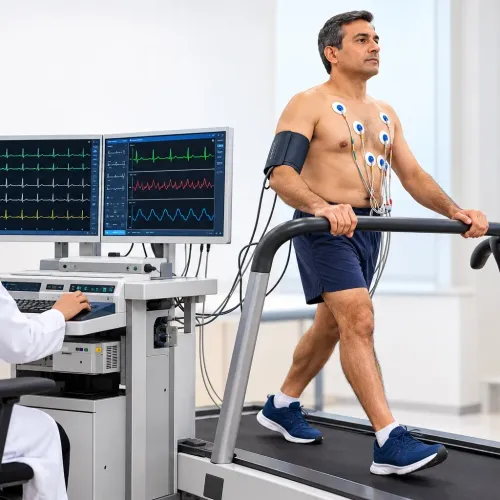
- An exercise test can reveal exertion-related arrhythmias or show how the rhythm responds to activity.
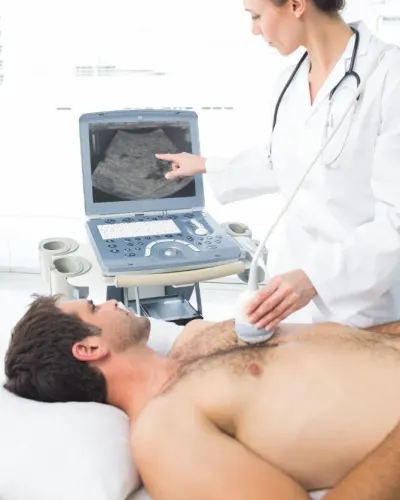
- Echocardiography checks chamber size, pumping strength, valves, and structural disease.
- Blood tests can identify contributors such as thyroid disease, anaemia, abnormal potassium, or abnormal magnesium.
- An electrophysiology study uses catheters inside the heart to map electrical signals and can reproduce or treat certain rhythms.
- Before your appointment, record the exact time the episode began, how long it lasted, your pulse rate, whether it felt regular or irregular, and what you were doing beforehand.
- Note dizziness, fainting, chest pain, breathlessness, or reduced exercise tolerance.
- List every medicine and supplement, plus caffeine, alcohol, nicotine, and recent illness.
- Bring smartwatch rhythm strips, heart-rate alerts, and home blood-pressure readings with their dates and times.
How do clinicians choose medicines for the rhythm and its cause?
The choice depends on the rhythm, symptoms, heart structure, stroke risk, and the cause found on testing. Rate-control drugs slow the ventricular response but do not necessarily restore normal rhythm. Rhythm-control antiarrhythmics or cardioversion aim to restore and maintain sinus rhythm.
| Option | Main purpose | When it applies |
|---|---|---|
| Rate-control drugs | Slow the heart’s ventricular response | Often used for atrial fibrillation when controlling the rate is safer or sufficient |
| Rhythm-control antiarrhythmics | Restore or maintain sinus rhythm | Considered for troublesome symptoms, poor rate control, or selected patients |
| Anticoagulation for atrial fibrillation | Prevent clot-related stroke | Based mainly on estimated thromboembolic risk, not whether AF is paroxysmal, persistent, or absent during the visit |
| Acute rhythm treatment | Stop a current rapid rhythm | Used when the rhythm type and the patient’s stability are clear |
The CHA2DS2-VASc score is used to estimate stroke risk, alongside clinical judgment and bleeding risk. When oral anticoagulation is indicated, direct oral anticoagulants are preferred to warfarin except with a mechanical heart valve or moderate-to-severe rheumatic mitral stenosis. Aspirin, alone or with clopidogrel, is not an equivalent substitute.
Flecainide and propafenone are generally reserved for people without prior myocardial infarction or significant structural heart disease. Amiodarone requires thyroid, lung, liver, eye, neurologic, and interaction monitoring. For stable, regular, narrow-complex SVT, try vagal maneuvers first, then intravenous adenosine if needed. Do not use adenosine casually for an irregular or uncertain rhythm.
Treat regular wide-complex tachycardia as ventricular tachycardia until proven otherwise; avoid verapamil or diltiazem. Never change these medicines without medical advice.
When do ablation, cardioversion, pacing, or an ICD become the better option?
A procedure becomes the better option when the rhythm’s pattern, symptoms, conduction problem, or risk of sudden cardiac arrest outweighs medication’s limitations.
| Option | What it addresses | When it becomes appropriate |
|---|---|---|
| Catheter ablation | Removes or isolates the tissue triggering an abnormal rhythm | A guideline-supported first-line option for selected patients with symptomatic paroxysmal AF, not only after every drug fails. It reduces recurrent AF more effectively than antiarrhythmic drugs in suitable patients, but recurrence and repeat procedures remain possible. |
| Electrical cardioversion | Restores a regular rhythm with a controlled electrical shock | For persistent, symptomatic, or unstable AF and other suitable fast rhythms. AF lasting at least 48 hours or of unknown duration generally requires three weeks of uninterrupted therapeutic anticoagulation, or imaging that excludes an atrial clot, followed by at least four weeks of anticoagulation. |
| Pacemaker | Prevents excessively slow rhythms caused by sinus-node dysfunction or heart block | A pacemaker primarily prevents excessively slow rhythms. No single heart-rate cutoff automatically requires pacing for sinus-node dysfunction; clinicians look for a link between symptoms and bradycardia. Acquired Mobitz II block, high-grade AV block, and third-degree AV block without a reversible or physiological cause generally warrant permanent pacing. |
| Implantable cardioverter-defibrillator (ICD) | Treats dangerous ventricular rhythms | An implantable cardioverter-defibrillator (ICD) can terminate life-threatening ventricular tachycardia or ventricular fibrillation with antitachycardia pacing or a shock. It is different from a pacemaker, which primarily prevents excessively slow rhythms. |
A rhythm specialist weighs your ECG, echocardiogram, symptoms, illnesses, and medication history. Dr Vijay Bang Cardiologist in Mumbai can use that information to structure the choice, including whether anticoagulation remains necessary after successful cardioversion or ablation.
Related services
Pacemaker Pacemaker Why do you need a pacemaker specialist Pacemakers are temporary or permanent, a medical device which uses electrical impulses, delivered by... |
ECG (Electrocardiogram) An ECG (Electrocardiogram) is a simple, painless test that records the electrical activity of the heart. View service → |
What reduces recurrence and makes long-term arrhythmia treatment safer?
Recurrence falls when you treat the drivers of the rhythm, not only the rhythm itself. AF risk-factor management includes weight reduction when BMI exceeds 27 kg/m², blood-pressure control, stopping smoking, limiting or avoiding alcohol, and regular moderate-to-vigorous exercise. Ask about sleep-disordered breathing; untreated sleep apnoea can undermine rhythm treatment.
- Record home blood-pressure readings and bring them to reviews.
- Take anticoagulants exactly as prescribed; do not stop because your pulse feels normal.
- Report bleeding, black stools, severe bruising, or missed doses promptly.
- Keep a symptom and pulse log, including triggers, duration, and activity.
Before elective cardioversion for AF lasting at least 48 hours or of unknown duration, clinicians generally use three weeks of uninterrupted therapeutic anticoagulation or imaging to exclude an atrial clot. Continue anticoagulation for at least four weeks afterward; longer treatment depends on stroke risk, not simply restored sinus rhythm.
Arrange exercise and arrhythmia follow-up after medication changes, cardioversion, ablation, or device implantation. Reviews can check ECG findings, kidney function, electrolytes, thyroid and liver tests, and drug interactions. Amiodarone requires particular surveillance for lung, thyroid, liver, eye, and neurological toxicity. Seek urgent advice for fainting, chest pain, severe breathlessness, or a sustained rapid heartbeat.
Frequently asked questions
Which irregular rhythms cause symptoms, and which require emergency care?
Premature atrial or ventricular beats can feel like skipped or forceful beats. Seek emergency care for fainting, chest pain, severe breathlessness, or a sustained rapid heartbeat.
How is an intermittent arrhythmia confirmed when a brief ECG is normal?
A Holter monitor records continuously for 24 hours or longer, while an event recorder or implantable loop recorder captures less frequent episodes.
How do clinicians choose medicines for the rhythm and its cause?
They match treatment to the rhythm, symptoms, heart structure and function, stroke risk, kidney function, other medicines, and the underlying cause.
When do ablation, cardioversion, pacing, or an ICD become the better option?
Ablation can target a faulty electrical circuit, cardioversion can restore rhythm, a pacemaker treats dangerously slow rhythms, and an ICD protects against life-threatening ventricular rhythms.
What reduces recurrence and makes long-term arrhythmia treatment safer?
Take medicines as prescribed, attend monitoring visits, manage blood pressure and sleep apnoea, limit triggers, and report fainting or worsening symptoms promptly.