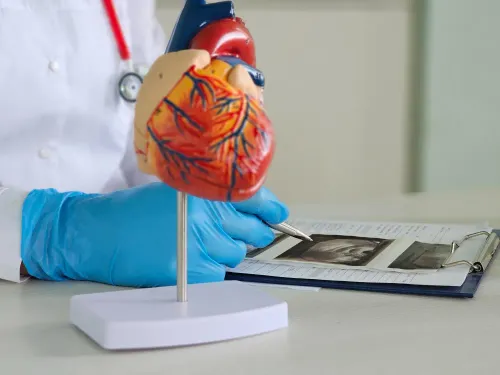
Chest discomfort, breathlessness, palpitations, dizziness and swelling do not all require the same response. Use the symptom pattern, its severity and your medical history to decide whether to call an ambulance, seek same-day assessment or book a routine heart check.
Key takeaways
- Call emergency services for persistent or recurring chest pressure, especially with breathlessness or sweating.
- Seek urgent medical assessment when serious symptoms have stopped but the cause remains unclear.
- Arrange a cardiology appointment for recurring symptoms, risk factors or unexplained exercise intolerance.
- Follow discharge instructions and book timely review after an emergency visit.
Which heart symptoms require an ambulance or emergency visit?
Call emergency services for chest pressure, squeezing, fullness or heaviness lasting more than a few minutes, returning after easing, or beginning at rest. This is a chest pressure emergency, especially with severe breathlessness, cold sweating, nausea, lightheadedness, fainting, confusion, sudden weakness, or pain spreading to the arm, shoulder, back, neck, jaw or upper abdomen.
These are heart attack warning signs and answer when to call an ambulance for heart symptoms.
| Pattern | Emergency warning |
|---|---|
| Chest or breathing symptoms | Sudden severe or new/worsening symptoms, blue or gray lips, or inability to speak normally |
| Heartbeat symptoms | A sustained rapid or irregular heartbeat with chest pain, severe breathlessness, fainting or marked dizziness |
| Blood pressure or limb symptoms | Blood pressure 180/120 emergency: a reading of 180/120 mm Hg or higher with chest pain, breathlessness, confusion, vision changes or neurological symptoms; sudden coldness, pallor, numbness or weakness in one limb |
- Stop exertion and sit down.
- Call an ambulance rather than driving yourself.
- Unlock the door if you are alone.
- Follow an existing prescribed nitroglycerin plan only as directed. Never take somebody else’s nitroglycerin or other medication.
Sudden severe symptoms and symptoms that are new or worsening need emergency assessment even without classic chest pain. Do not wait for a cardiology appointment.
What should you do when symptoms are serious but not clearly an emergency?
Choose a same-day cardiology appointment or urgent medical assessment when symptoms are new, worsening, exertional or recurring rather than waiting for routine watchful waiting. New shortness of breath and heart problems can appear without chest pain.
Seek prompt assessment for:
- Breathlessness during ordinary activity, breathlessness that wakes you at night or requires extra pillows, reduced exercise tolerance, unexplained fatigue, or increasing ankle or abdominal swelling.
- Repeated dizziness or fainting, especially fainting during exercise, while lying down, or repeatedly without an explanation.
- A sustained rapid pulse or palpitations lasting more than a few minutes. For heart palpitations when to see a cardiologist, use these triggers: exertional or recurrent palpitations, or palpitations with chest pain, breathlessness, fainting or marked dizziness.
- In known heart failure, rapid weight gain of about 0.9–1.4 kg in one day or 2.3 kg in one week, worsening cough, swelling or breathlessness.
Follow your own clinician’s heart-failure action plan first, including its weight threshold and medication instructions. A rapid or irregular heartbeat with severe symptoms needs emergency care, not a same-day appointment.
Known coronary disease, heart failure, significant arrhythmia, cardiomyopathy, congenital heart disease, valve disease or a previous heart attack lowers the threshold for same-day contact when symptoms change. Do not attribute a new pattern automatically to an old diagnosis.
Why can heart problems feel like indigestion, anxiety or poor fitness?
Heart problems can cause nausea, unusual tiredness, breathlessness, dizziness, back or jaw discomfort, and upper-abdominal pressure instead of obvious chest pain. These atypical heart attack symptoms occur more often in women, older adults and people with diabetes, so heart symptoms in women should not be dismissed as indigestion, anxiety or poor fitness.
| Possible explanation | Clues that support it | What not to assume |
|---|---|---|
| Reflux or heartburn | Burning after meals, sour taste or regurgitation | “Heartburn or heart attack” cannot be settled by timing alone |
| Muscle strain | Pain changes with movement or touch | New exertional discomfort still needs assessment |
| Panic symptoms | Sudden fear, rapid breathing, tingling or trembling | Panic-like symptoms can accompany a cardiac event |
| Asthma or infection | Wheezing, cough, fever or congestion | Breathlessness without fever can still be cardiac |
Symptoms at rest, at night, after meals or during exertion provide clues, not a diagnosis. New, severe, prolonged or worsening symptoms need medical assessment regardless of the apparent explanation.
Discomfort predictably triggered by exercise or emotional stress and relieved by rest still requires evaluation for stable angina; relief with rest does not make a recurring pattern harmless.
Brief, isolated skipped beats without other symptoms are less urgent. New irregular beats, including palpitations after meals or at night, deserve cardiology review when you have heart disease or a family history of sudden cardiac death, especially if they recur, last more than a few minutes, or cause breathlessness, chest discomfort, fainting or marked dizziness.
When is a routine heart-specialist appointment the right next step?
A routine cardiology consultation fits symptoms that are stable, brief or gradually developing rather than severe, prolonged or rapidly worsening. Book one for recurring breathlessness with exertion, gradual loss of stamina, unexplained fatigue, intermittent dizziness, or brief isolated palpitations that keep returning.
Arrange planned cardiovascular assessment for these patterns:
- Exertional calf or thigh pain that eases with rest, a nonhealing foot wound, or other peripheral artery disease symptoms. Do not dismiss them as arthritis or poor fitness.
- Persistent ankle swelling, repeated high blood-pressure readings without emergency symptoms, or blood pressure that remains high despite treatment.
- A new murmur, abnormal ECG, enlarged heart or abnormal echocardiogram. These findings warrant clinician-directed review, but none proves a diagnosis; an innocent murmur can occur without structural heart disease. A heart murmur evaluation may simply confirm that no further treatment is needed.
- A first-degree relative with sudden unexplained death, cardiomyopathy or an inherited rhythm disorder. Discuss screening, especially if you have exertional fainting, unexplained seizures, palpitations or reduced exercise tolerance; screening can require more than one resting ECG.
Do not use a routine appointment for symptoms that last, change, occur at rest or worsen quickly. Seek urgent assessment instead. A planned review is for a stable pattern while you arrange evaluation, not a way to wait through a dangerous change.
How should you arrange follow-up after symptoms or an emergency visit?
Record each episode in a symptom diary for your cardiologist: note when it started, what you were doing, whether it followed a meal or happened at night, how long it lasted, what relieved it, and any change in pulse, blood pressure or weight.
A normal single ECG or initial blood test does not exclude an intermittent rhythm problem or an evolving cardiovascular condition.
After an emergency visit or hospital admission, follow the discharge plan for:
- Chest pain or suspected heart attack, even when initial tests were reassuring.
- Fainting or an arrhythmia, including instructions for monitoring, medicines and review.
- Heart failure; arrange heart failure follow-up and report worsening breathlessness, cough, swelling, fatigue or weight gain of about 0.9–1.4 kg in one day or 2.3 kg in one week.
- Established heart disease when symptoms develop a new pattern; contact the treating clinician promptly instead of assuming the old diagnosis explains it.
A reader in Mumbai deciding between urgent reassessment and a scheduled appointment can seek structured symptom review and longer-term cardiovascular planning from Dr Vijay Bang Cardiologist in Mumbai. A Mumbai heart specialist can also help decide whether recurring episodes need monitoring or further testing.
Emergency symptoms need emergency services; changing or exertional symptoms need prompt review; stable, brief and non-progressive concerns can use a routine appointment.
Frequently asked questions
Which heart symptoms require an ambulance or emergency visit?
Call emergency services for chest pressure, squeezing, fullness or heaviness lasting more than a few minutes, returning after easing, or beginning at rest. Treat it as an emergency when it occurs with severe breathlessness, cold sweating, nausea, lightheadedness, fainting, confusion, sudden weakness, or pain spreading to the arm, shoulder, back, neck, jaw or upper abdomen.
What should you do when symptoms are serious but not clearly an emergency?
Stop exertion, sit down and seek urgent medical assessment when symptoms are serious, persistent, recurrent or unexplained, even if they do not clearly meet emergency criteria. Do not drive yourself if symptoms are worsening or you feel faint.
Why can heart problems feel like indigestion, anxiety or poor fitness?
Heart-related discomfort can resemble indigestion, anxiety or poor fitness because reduced blood flow and abnormal heart rhythms affect breathing, the chest and nearby nerves. A burning sensation, fatigue, breathlessness or unease does not rule out a heart problem.
When is a routine heart-specialist appointment the right next step?
Book a routine cardiology appointment for recurring, exertional or unexplained symptoms that have settled, or when you have conditions such as high blood pressure, diabetes or high cholesterol. Seek urgent care instead if symptoms return, intensify or occur at rest.
How should you arrange follow-up after symptoms or an emergency visit?
Follow the discharge instructions, complete prescribed tests and medicines, and book the recommended review. Bring your discharge papers, test results, medicine list, symptom timeline and details of triggers, duration and associated symptoms.